
Quick Answer
Your home likely needs whole house surge protection if you own sensitive electronics, an EV charger, or inverter-driven HVAC equipment, live in a storm-prone area, or have had unexplained appliance failures. A licensed electrician can install a surge protective device at your panel. Cost depends on your panel and the equipment chosen, so ask for a written quote.
Why Does Whole House Surge Protection Matter Now?
Most homeowners never think about power surges until a lightning storm fries their refrigerator’s control board or their smart thermostat suddenly goes dark. The signs your home needs whole house surge protection are often subtle: a flickering light here, a dead garage door opener there, until one storm causes thousands of dollars in damage all at once. That is why more South Florida homeowners are adding panel-level protection.
Code requirements point the same way. Since the 2020 edition, the National Electrical Code has required a surge protective device on the electrical service of a home, including when the service equipment is replaced, and Florida currently enforces the 2020 National Electrical Code through the Florida Building Code, 8th Edition (2023).
What Are the Warning Signs Your Home Needs Surge Protection?
Some signs are obvious, others build slowly over months or years. Here are the most reliable indicators that your home is due for panel-level protection.
- You own a lot of expensive, sensitive electronics. Smart TVs, computers, networking equipment, EV chargers, heat pumps, inverter-driven HVAC systems, induction ranges, and smart home hubs are all far more vulnerable to surge damage than the appliances of a decade ago.
- You live in a lightning-prone or hurricane-prone region. South Florida sees frequent summer thunderstorms and utility switching during hurricane season, both of which can send surges into a home.
- Your utility service is unstable. Flickering lights, repeated brownouts, or breakers that trip for no clear reason often point to voltage disturbances entering your home from the grid.
- Your home relies heavily on motor-driven appliances. Refrigerators, sump pumps, well pumps, HVAC compressors, and garage door openers all generate small internal transients every time they cycle on and off, and those add up.
- You already use plug-in power strips but still worry about hardwired equipment. Point-of-use strips protect what’s plugged into them, but they do nothing for your HVAC system, water heater, or built-in appliances.
- You’ve had unexplained electronics failures. Dead LED drivers, malfunctioning thermostats, or burned-out appliance control boards with no obvious cause are classic symptoms of cumulative surge damage.
- You recently modernized your electrical system. Adding a generator, solar inverter, battery backup, or an EV charger increases both the number of sensitive devices in your home and your exposure to surges from switching events.
If you’re planning an EV charger installation, this is also a good moment to evaluate your panel’s surge protection, as detailed in our EV charger installation guide for Fort Lauderdale homeowners.
How Does a Whole House Surge Protector Work?
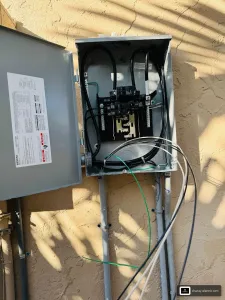
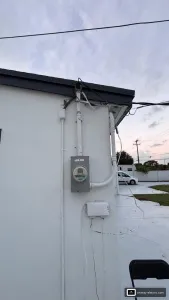
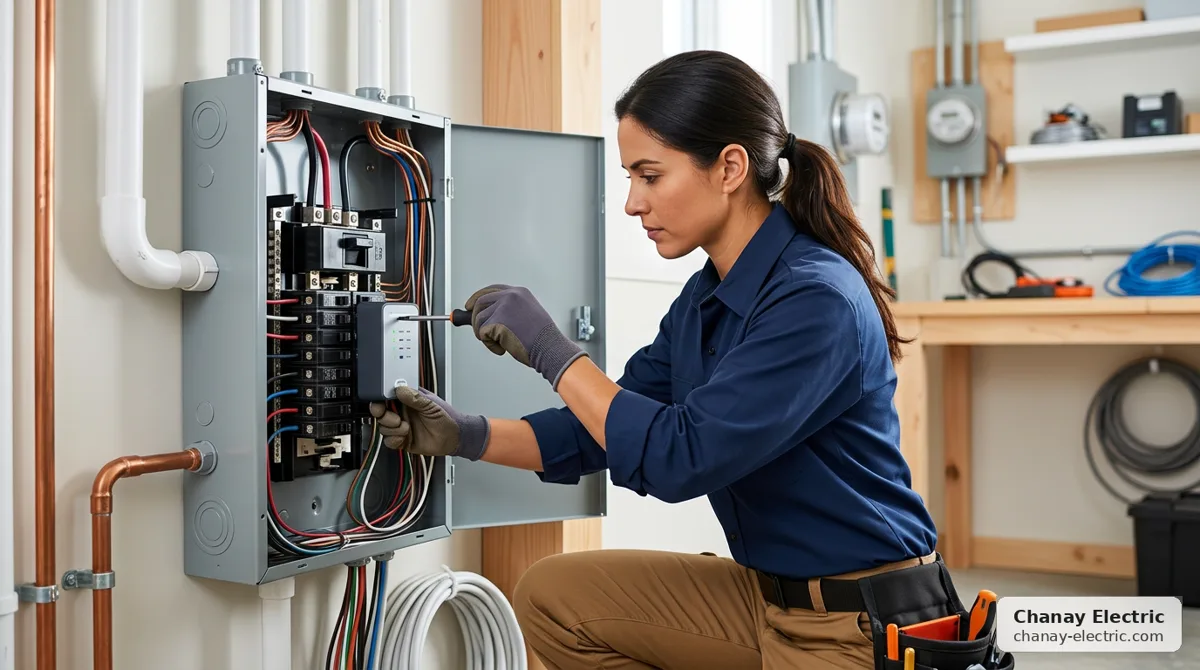
A whole house surge protector installs directly at your electrical panel or meter, monitoring the incoming power on every circuit rather than just the outlet a device is plugged into. When it detects a voltage spike above safe levels, it diverts the excess energy to the ground wire in a fraction of a millisecond, protecting everything downstream: your HVAC system, water heater, lighting circuits, and every outlet in the house.
Most residential systems use a Type 2 surge protective device (SPD), installed either inside the main panel or in an adjacent enclosure. Type 2 devices are designed to handle repeated surge events over their service life, unlike plug-in strips that can degrade after absorbing one or two significant hits.
For a properly layered defense, many electricians recommend combining a panel-level SPD with point-of-use protection for the most sensitive electronics. If you’re unsure what your existing panel can support, our team can evaluate it as part of a broader service; see our whole-house surge protector installation services for details specific to South Florida homes.
Is a Plug-In Surge Protector Enough, or Do You Need Whole-House Protection?
Plug-in strips and whole-house systems solve different problems. A power strip protects a TV or computer plugged directly into it, but it does nothing for your air conditioner, water heater, or any hardwired appliance. Whole-house protection covers every circuit at once, which is why many electricians recommend using both together rather than choosing one over the other.
| Feature | Plug-In Surge Strip | Whole House Surge Protector |
|---|---|---|
| Coverage | Only devices plugged into it | Every circuit in the home |
| Protects hardwired appliances | No | Yes |
| Durability | Degrades after 1-2 major surges | Rated for repeated high-energy events |
| Installation | DIY, plug and go | Licensed electrician required |
How Much Does Whole House Surge Protection Cost?
Pricing for whole house surge protection depends on your panel type, the SPD capacity you need and how easy the installation is. On a modern panel with space available, it is usually a short job.
Homes with older panels, limited breaker space, or complications from added solar, generator, or EV charger systems can push costs higher due to additional labor or panel upgrades. As always, pricing varies based on your specific project, and the only way to get an accurate number is a professional evaluation of your panel and home’s electrical load. If your panel is outdated or was flagged during a prior inspection, it may be worth reviewing alongside other electrical upgrades, similar to considerations covered in our Plantation FL residential electrical services overview.
Is Whole House Surge Protection Really Necessary?
For most modern homes, yes. The average household today runs far more sensitive electronics than it did even five years ago, and the financial exposure from a single major surge event now often exceeds the lifetime cost of a whole-house SPD several times over.
South Florida homes face particular exposure given frequent thunderstorm activity and hurricane season utility fluctuations. If you’ve recently had panel work done, added a generator, or are considering electrical upgrades as part of a larger project, it’s worth reviewing your overall setup; our completed electrical projects page shows examples of panel and surge protection work we’ve handled locally, and our guide for Broward County homeowners covers related considerations for residential electrical contractors in the area.
Key Takeaways
- Flickering lights, unexplained appliance failures, and frequent breaker trips are early warning signs your home needs whole-house surge protection.
- Homes with EV chargers, solar inverters, smart hubs, or inverter-driven HVAC systems carry significantly higher surge exposure than a decade ago.
- Since the 2020 NEC, new and replaced home electrical services must include surge protection.
- Installation cost depends on your panel type and scope, so ask for a written quote.
- Plug-in strips only protect what’s plugged into them; whole-house SPDs protect every circuit, including hardwired appliances.
- A licensed electrician should evaluate your panel before installation, especially if you’ve added a generator, EV charger, or solar system.
People Also Ask
How does a whole-house surge protector work?
It installs at your main electrical panel or meter and monitors incoming voltage on every circuit. When it detects a spike, it diverts excess energy safely to ground before it reaches your appliances and electronics.
What are the benefits of a whole house surge protector?
It protects every circuit in the home, including hardwired appliances that plug-in strips can’t cover, extends the lifespan of electronics and HVAC systems, and reduces the risk of costly insurance claims after major storms.
Is surge protection necessary for a modern home?
Yes, especially for homes with smart devices, EV chargers, solar inverters, or inverter-driven HVAC systems, all of which are more sensitive to voltage fluctuations than older appliances.
Can a power surge damage my HVAC system?
Yes, HVAC compressors and inverter-driven systems are particularly vulnerable to surges, and repeated small transients can shorten their lifespan even without a dramatic single failure.
Frequently Asked Questions
What are the clearest signs my home needs whole house surge protection?+
Frequent flickering lights, unexplained failures of electronics or appliance control boards, an unstable utility connection, or recently adding an EV charger, generator, or solar system are the strongest indicators.
Do I still need plug-in surge protectors if I install a whole-house system?+
Yes, many electricians recommend layering both. Whole-house protection stops large surges at the source, while plug-in strips add a second layer of protection for the most sensitive devices like computers and TVs.
How much does whole house surge protection cost?+
It depends on your panel type, the equipment and how complex the installation is. A licensed electrician can give you a written quote after looking at your panel.
How long does whole-house surge protector installation take?+
On a standard panel with space available, installation is usually completed in a single short visit. Older panels or homes with solar or generators may take longer.
Does homeowners insurance cover surge damage?+
Coverage for surge damage varies by policy, so check yours. Preventing damage with a whole-house SPD is usually far less disruptive than filing a claim and replacing equipment.
Can I install a whole-house surge protector myself?+
No, whole-house surge protectors connect directly to your main electrical panel and should always be installed by a licensed electrician to ensure proper grounding and code compliance.
If you’ve noticed any of these warning signs at home, don’t wait for the next storm to find out how exposed your electronics really are. Contact Chanay Electric today for a professional evaluation of your panel and a custom quote for whole-house surge protection, or visit chanay-electric.com to learn more about our residential electrical services across South Florida.
Need a licensed electrician in Plantation or anywhere in Broward County? Call Chanay Electric at (754) 799-4371 or request a quote.