Quick Answer
Broward County has no separate smart-home wiring code. Instead, smart lighting, EV chargers, cameras, sensors, and automated systems must comply with the Florida Building Code 8th Edition, the 2020 National Electrical Code, and local permitting rules enforced by the county or your specific city. A licensed electrician who pulls the correct permit and understands which devices trigger inspection is the single biggest factor separating a safe smart home installation from a liability.
Here’s a statistic that surprises most homeowners: the global smart home market is projected to keep accelerating through 2026, with industry trade groups reporting double-digit growth in connected device adoption year over year, according to CEDIA’s 2026 smart home market analysis. Yet almost none of that growth comes with a dedicated “smart home code.” Broward County homeowners installing automated lighting, motorized shades, EV chargers, or hardwired security systems are still governed by the same electrical rules that apply to a standard panel upgrade or a kitchen remodel.
That gap between consumer excitement and regulatory reality is exactly where a good electrical contractor earns their keep. Understanding smart home electrical wiring requirements in Broward County means knowing which devices need a permit, which code edition governs the work, and how local jurisdictions like Fort Lauderdale, Hollywood, Coral Springs, Pembroke Pines, and Boca Raton each handle inspections differently. This article walks through what a trustworthy contractor does to keep your smart home project safe, compliant, and protected under warranty.
What’s Driving the Smart Home Boom in Broward County?
South Florida homeowners are adopting connected technology faster than ever: smart thermostats, video doorbells, app-controlled lighting, automated shades, and whole-home standby generators have moved from novelty to near-standard expectations in new construction and major remodels. Add in the regional push toward electric vehicles and battery backup systems, and electrical panels are handling more connected load than they were designed for a decade ago.
This demand surge is colliding with an aging housing stock. Many Broward homes built before the 1990s were never wired with the capacity, grounding, or circuit separation that modern smart devices expect. If you’re researching whether your home’s existing wiring can even support these upgrades, it’s worth reviewing our guide on rewiring older homes in Florida before adding automation on top of outdated infrastructure.
What Electrical Code Actually Applies to Smart Home Wiring?
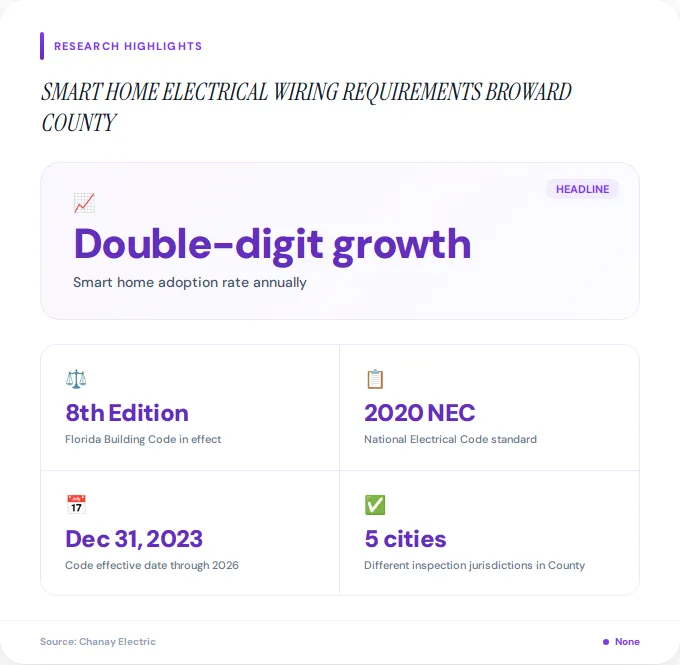
There is no Broward-specific smart home code. Instead, every hardwired automation device, from a smart dimmer switch to a Level 2 EV charger, falls under the Florida Building Code, 8th Edition, which took effect December 31, 2023, and remains in force through December 30, 2026. This statewide code adopts NFPA 70, the 2020 National Electrical Code (NEC), as the governing electrical standard, as confirmed by the Florida Building Commission’s official code resource page.
The residential side of that framework is built on the 2021 International Residential Code with Florida-specific amendments. In practice, that means a smart lighting retrofit is evaluated under the same chapter of the code as a standard lighting circuit, and electrical sections governing wiring methods, grounding, and bonding apply equally, as outlined in the Florida Building Code’s electrical chapter reference. A contractor who treats “smart” devices as exempt from code because they’re low-voltage or Wi-Fi-connected is misunderstanding the law.
“Homeowners often assume that because a smart switch or sensor is small, it falls outside code requirements. In reality, if it’s hardwired into a branch circuit, it’s subject to the same NEC rules as any other fixture. The size of the device has nothing to do with the size of the compliance obligation.”
When Is a Permit Required for Smart Home Devices?
Permits are the backbone of accountability in electrical work, and smart home projects are not exempt simply because the equipment looks modern. Based on current Broward permitting guidance, a permit is generally required for:
- New branch circuits or wiring runs for automated systems
- New receptacles, switches, or hardwired smart lighting fixtures
- Panel replacements, subpanels, or load-center modifications to support added smart devices
- Whole-home generators, automatic transfer switches, and battery energy-storage systems
- EV charging equipment installation
- Hardwired security, access-control, or fire-alarm systems regulated by the local jurisdiction
- Any wiring tied to remodeling, wall removal, or structural changes
- Work that changes circuit capacity, overcurrent protection, grounding, or bonding
Broward’s electrical permit checklists generally require the application to identify the full scope of work, and county documentation may require two sets of plans for qualifying electrical, mechanical, or plumbing projects, according to Broward County’s electrical permit documentation. Local permit trackers confirm that new wiring, service upgrades, and electrical modifications all require permits, whether the application is filed through the county or a specific municipality, as detailed by Florida’s statewide electrician permit database.
Minor like-for-like replacements are sometimes exempt, but the exemption window is narrow. Swapping a standard switch for a smart dimmer is not automatically permit-exempt if the replacement changes wiring configuration, adds a neutral wire, or alters the circuit in any way.
Why Does DIY Smart Home Wiring Create Risk?
Retail smart home kits make installation look effortless, and many devices genuinely are simple to pair with an app. The risk isn’t the app, it’s the wiring behind the wall plate. A smart switch installed without a neutral wire, in a box that’s not properly grounded, or on a circuit that’s already near capacity, can create a fire hazard that has nothing to do with the device’s software.
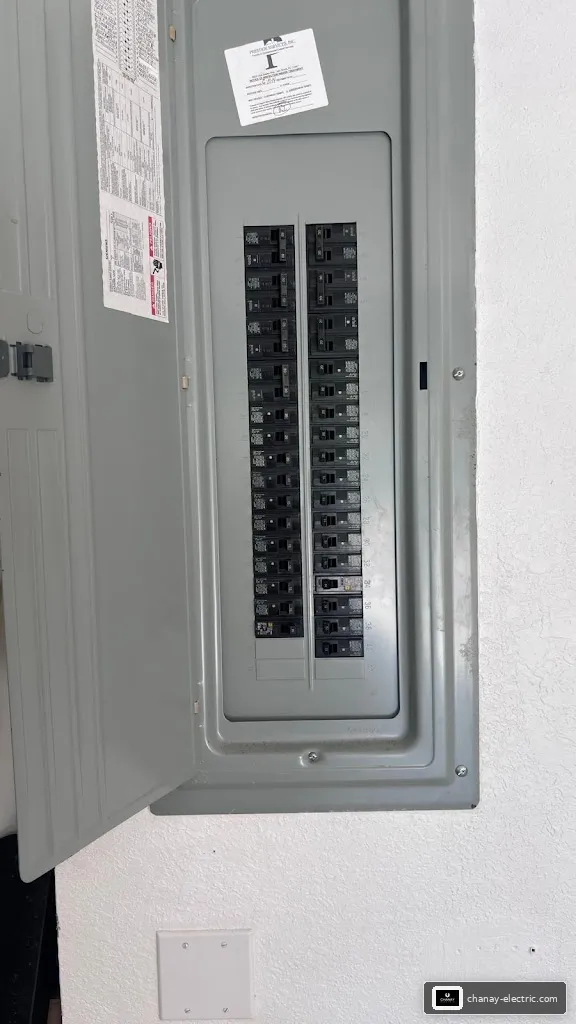
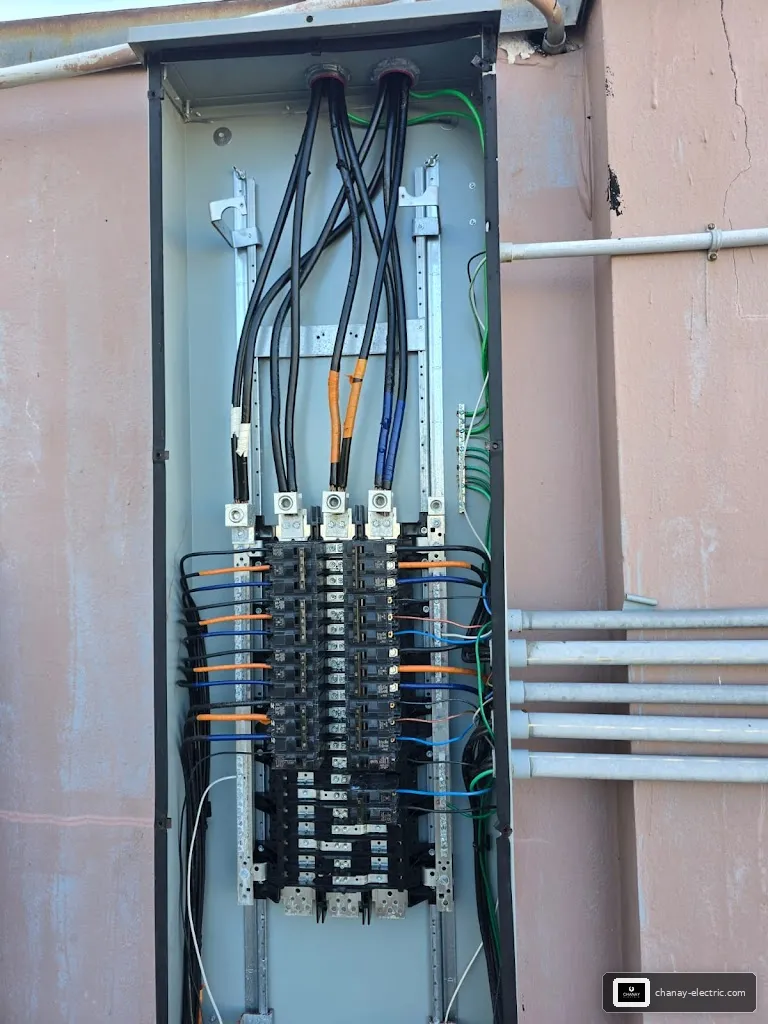
This is especially relevant in homes with older electrical systems. If your panel is already undersized for your current load, adding automated lighting, smart climate control, and an EV charger on top of it compounds the problem. Our breakdown of electrical panel size requirements for Florida homes explains why panel capacity should be assessed before any major smart home expansion, not after.
What Does a Good Contractor Do Differently?
The difference between a contractor who treats smart home wiring as a box-check and one who treats it as a safety discipline shows up long before the first device is installed. A good contractor evaluates your existing panel capacity, confirms grounding and bonding meet current NEC standards, and pulls permits proactively rather than hoping an inspector never asks.
They also document everything: load calculations, permit numbers, inspection sign-offs, and manufacturer specifications for every hardwired device. This documentation matters most when you sell the home, file an insurance claim, or need warranty service years later. According to Florida Electrical Authority’s overview of smart home electrical systems, proper documentation and code-compliant installation are consistently cited as the factors that prevent costly rework down the line.
A reputable contractor also understands that GFCI and AFCI protection requirements still apply in smart home contexts, particularly in kitchens, bathrooms, and bedrooms where automated outlets or switches are installed. Our article on how GFCI outlets protect bathrooms and kitchens covers the baseline protections that should never be skipped, automation or not.
How Do Jurisdictions Compare Across Broward County?
One of the most overlooked realities of smart home wiring in Broward is that permitting authority isn’t centralized. Unincorporated Broward County uses county permitting procedures, but incorporated cities administer their own building departments with their own review timelines and submission portals.
| Jurisdiction | Permitting Authority | Notes for Smart Home Work |
|---|---|---|
| Unincorporated Broward | Broward County Building Department | Standard county electrical permit process applies |
| Fort Lauderdale | City Building Services | Separate city portal; own inspection scheduling |
| Hollywood | City Building Division | Local review for life-safety and alarm systems |
| Coral Springs / Pembroke Pines / Boca Raton | Independent City Departments | Confirm current code edition before filing |
Because of this fragmentation, a general reference like the Broward County Building Department’s official site is a useful starting point, but it won’t tell you everything about a specific city’s review queue or inspection scheduling. Cross-referencing requirements through a resource like Broward County’s municipal electrical permit lookup tool can help homeowners understand which department actually has jurisdiction over their address.
How Should Warranty and Safety Documentation Work?
A trustworthy contractor doesn’t just finish the job and hand you an invoice. They provide a clear scope of work, a copy of the permit application, inspection results, and a written warranty that specifies what’s covered and for how long. For smart home systems specifically, that documentation should also include device-level warranty terms from the manufacturer, since the contractor’s labor warranty and the product’s manufacturer warranty are two separate things.
If you’re preparing for a home sale or refinance, electrical documentation becomes even more important. Unpermitted smart home modifications are a common trigger for flagged issues during resale. Our guide to electrical code violations in home inspections explains how unpermitted work surfaces during a sale and what it can cost you in negotiations.
Before any inspection, whether for a new installation or a resale, it helps to understand what inspectors are actually looking for. Our walkthrough on how to pass an electrical inspection in a Florida home applies directly to smart home additions, since inspectors check grounding, bonding, and circuit labeling regardless of how “smart” the final device is.
What Happens When the Code Cycle Changes in 2027?
The Florida Building Code 8th Edition is scheduled to remain effective only through December 30, 2026. A new code cycle is anticipated to take effect afterward, and industry trackers are already discussing how the next NEC update cycle may be adopted into Florida’s framework, as noted by ProFix Directory’s tracking of the NEC transition in Florida.
This matters enormously for anyone planning smart home work in late 2026 or into 2027. The effective code depends on your permit-application date, not when you started planning the project. Homeowners should not assume that plans or device specifications prepared under the current code will automatically remain acceptable after the transition. A good contractor confirms the applicable code edition with the local building department before filing, every single time, rather than relying on outdated assumptions.
Key Takeaways
- Broward County has no separate smart home code; all automation wiring falls under the Florida Building Code 8th Edition and the 2020 NEC.
- Most hardwired smart devices, including lighting, EV chargers, and security systems, require a permit, not just a professional installer.
- Permitting authority varies by city: unincorporated Broward, Fort Lauderdale, Hollywood, and other municipalities each run their own review process.
- Panel capacity should be evaluated before adding smart devices, especially in homes built before major code updates.
- Documentation, including permits, inspection sign-offs, and warranty terms, protects you during resale and insurance claims.
- The current code cycle expires December 30, 2026, so projects filed near or after that date need code confirmation from the local building department.
- DIY smart device installation can bypass critical safety steps like proper grounding, neutral wiring, and GFCI/AFCI protection.
People Also Ask
Is there a specific smart home electrical code in Florida?
No. Florida applies the Florida Building Code 8th Edition and the 2020 NEC to smart home installations the same way it applies them to standard electrical work. There is no separate smart-home-specific code chapter.
Do I need a permit to install smart light switches?
If the installation changes wiring, adds a neutral conductor, or alters the circuit, a permit is typically required. Simple like-for-like swaps may be exempt, but exemptions are narrow and vary by jurisdiction.
Can my existing panel handle smart home upgrades?
It depends on your panel’s age, amperage, and current load. Many older Broward homes need a load calculation or panel upgrade before adding EV chargers, standby generators, or extensive automation.
Does Fort Lauderdale require different permits than unincorporated Broward?
Yes. Fort Lauderdale and other incorporated cities administer their own building departments and permit portals, separate from Broward County’s unincorporated area process.
Frequently Asked Questions
What code governs smart home wiring in Broward County?+
The Florida Building Code 8th Edition, effective through December 30, 2026, governs electrical installations statewide, including Broward County. It adopts the 2020 National Electrical Code for all electrical work, whether it’s a standard outlet or a hardwired smart device.
Does installing an EV charger require a permit in Broward County?+
Yes. EV charging equipment installation is explicitly listed among the work types that generally require a permit in Broward, regardless of whether it’s installed by the homeowner or a contractor.
Can I install smart home devices myself without a license?+
Plug-in smart devices generally don’t require a license, but any hardwired installation, such as a smart switch, thermostat wiring, or security system tied into existing circuits, typically requires a licensed electrician and a permit if it alters the wiring.
Will the 2027 code change affect my smart home project?+
It could. The current Florida Building Code edition expires December 30, 2026, and projects submitted after the transition may fall under a new code cycle. Always confirm the applicable edition with your local building department before filing a permit near that date.
How do I know if my home’s wiring can support a smart home system?+
A licensed electrician can perform a load calculation and inspect your panel, grounding, and circuit capacity. This is especially important in homes with older wiring systems that weren’t designed for today’s connected device loads.
What should a smart home wiring quote include?+
Pricing varies based on your specific project scope, materials, panel condition, and number of devices, so costs should always be discussed as a custom quote rather than a flat rate. A thorough quote should include permit fees, labor, load calculation if needed, and written warranty terms.
Smart home technology is moving fast, but the rules that keep your family safe haven’t changed just because the devices got smarter. If you’re planning automated lighting, an EV charger, or a whole-home upgrade anywhere in Broward County, it pays to work with a team that treats permitting and code compliance as seriously as the technology itself. Browse our completed electrical projects across Broward County or visit Chanay Electric to request a custom quote for your smart home wiring project today.