Quick Answer
Electrical rewiring in older Florida homes typically costs $7,000 to $30,000 or more, depending on square footage, wall access, panel condition, and whether the home has aluminum wiring or knob-and-tube wiring. Homes built before the 1980s across South Florida often need evaluation for aluminum branch wiring, ungrounded circuits, and undersized panels that can’t handle modern loads like EV chargers, pool pumps, and central air conditioning.
More than 13% of home fires in the United States are linked to electrical failures or malfunctions, and Florida’s aging housing stock puts a disproportionate number of homeowners in that statistic’s path. Walk through any neighborhood built between the 1950s and 1980s in Fort Lauderdale, Hollywood, or Plantation, and you’re looking at a landscape where electrical rewiring older homes Florida searches aren’t academic curiosity. They’re homeowners staring at a two-prong outlet, a warm breaker panel, or an insurance company that just said no.
South Florida’s housing boom decades predate today’s electrical code, and the materials used then don’t match the demands of now. Central air conditioning, pool equipment, EV chargers, and whole-house surge protection didn’t exist when many of these homes were wired. This guide walks through what rewiring actually involves, what drives the price, and how to evaluate whether your home is a candidate.
What Is Electrical Rewiring, and Why Do Florida’s Older Homes Need It?
Electrical rewiring means removing some or all of a home’s existing wiring and replacing it with new conductors, devices, and often a new panel, sized to current electrical code and actual household load. It’s different from a simple repair because it addresses the entire system rather than a single faulty circuit.
Florida’s building boom from the 1950s through the 1970s used materials and methods that were acceptable at the time but are now recognized as liabilities. Industry data on old-home wiring risks consistently points to aluminum branch circuits and deteriorated insulation as the two biggest culprits driving rewiring demand statewide. Our own electrical rewiring services are built specifically around this reality: older homes rarely need a cookie-cutter fix, they need an evaluation first.
What Are the Warning Signs That an Older Florida Home Needs Rewiring?
Most homeowners don’t wake up one day and decide to rewire a house. Something tips them off first: a flickering light, a breaker that trips for no obvious reason, or an inspector’s report ahead of a sale or refinance. Here are the most common red flags in Florida’s older housing stock:
- Aluminum branch-circuit wiring, common in homes built during the 1960s and 1970s. Aluminum expands and contracts more than copper, which increases the risk of loose, overheated connections at outlets and switches.
- Knob-and-tube wiring, generally found in pre-1940 construction. It lacks grounding, has no modern circuit protection, and its insulation is often brittle or missing. Our detailed breakdown of knob and tube wiring replacement cost covers this in depth.
- Two-prong, ungrounded receptacles throughout the home, especially in kitchens, bathrooms, and garages.
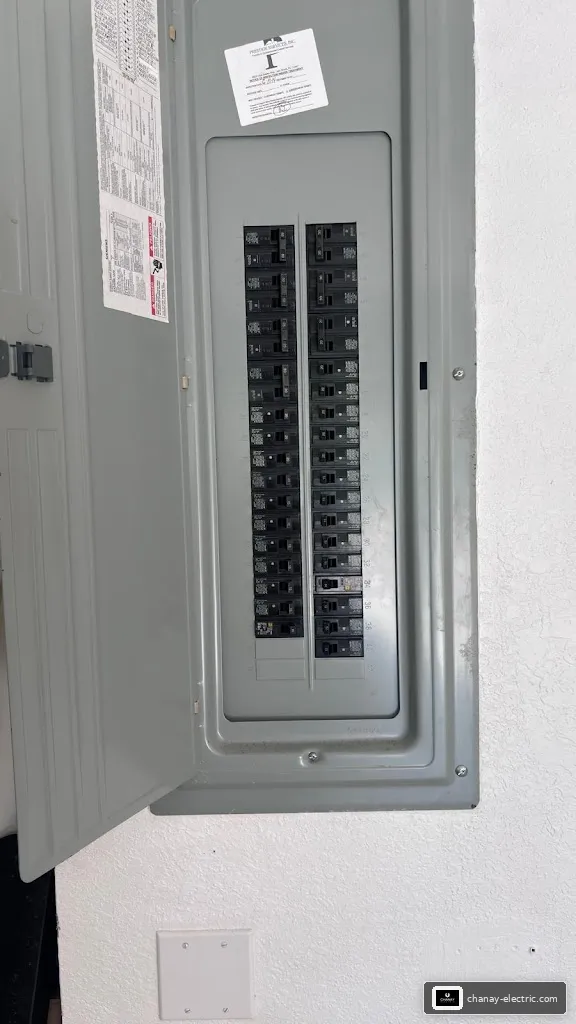
- Old fuse boxes or undersized panels, sometimes with unpermitted aftermarket breakers crammed in.
- Insufficient capacity for modern loads like central AC, electric ranges, pool pumps, and EV charging equipment.
- Missing AFCI and GFCI protection in bedrooms, kitchens, and bathrooms, which current code requires in new construction and major renovations.
- Visible DIY shortcuts, including doubled wires under one terminal, oversized breakers protecting undersized wire, or extension cords used as permanent wiring.
Rising, unexplained utility bills can also be a clue. Degraded insulation and loose connections create resistance, and research on old wiring and energy waste shows that resistance translates directly into wasted electricity and heat buildup inside walls.
What Does a Whole-Home Rewiring Project Actually Involve?
A full rewire is a sequenced project, not a single afternoon of work. It generally follows this order:
- Evaluation and load calculation. An electrician inspects the existing wiring, panel, grounding system, and documents every circuit, then calculates the home’s actual electrical demand.
- Permitting. Plans are submitted to the local building department before any work begins.
- Rough-in. New wiring is run through walls, attics, and crawlspaces. In concrete-block construction common across South Florida, this step often requires surface-mounted conduit or careful fishing through existing chases, which adds labor time.
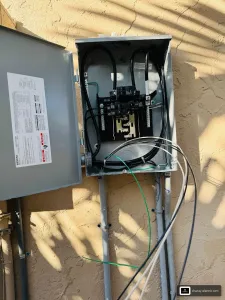
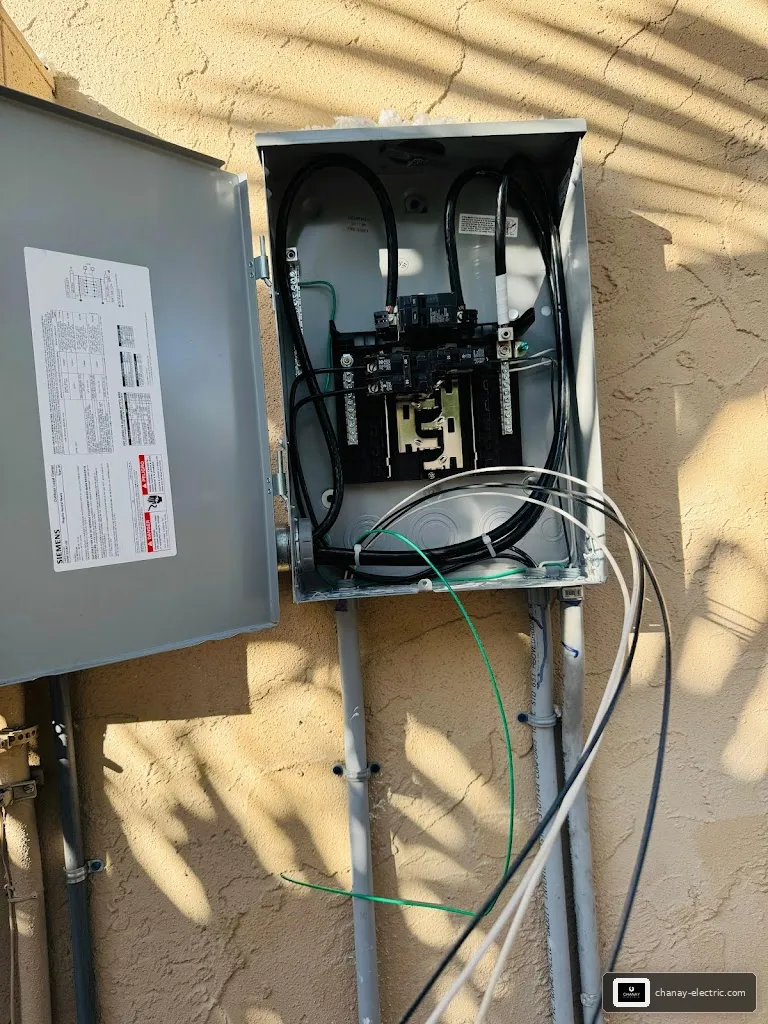
- Panel work. Many rewires include a full panel replacement or upgrade to 200 amps to support modern loads. See our breakdown of electrical panel replacement cost in Florida for how this piece is typically priced separately.
- Device and fixture installation. Outlets, switches, GFCI and AFCI breakers, and fixtures are installed and connected.
- Inspection. The local jurisdiction inspects rough-in and final work before the system is approved.
- Patch and repair. Drywall, plaster, or tile disturbed during the rewire is repaired, though this is sometimes handled by a separate contractor.
Homeowners sometimes assume rewiring means tearing out every wall in the house. In practice, experienced electricians minimize invasive work wherever attic or crawlspace access allows it, reserving wall-opening for areas where there’s no other path.
What Affects the Cost of Rewiring an Older Home in Florida?
Pricing varies based on your specific project, and any number you see online should be treated as a planning range, not a quote. That said, published data gives a useful sense of scale for 2026 to 2027 budgeting.
| Project Type | Typical Planning Range |
|---|---|
| Full rewire, ~1,000 sq ft home | $7,000–$11,000 |
| Broader full-rewire range (varies by access/materials) | $8,000–$30,000+ |
| Tampa-area full rewire | $8,000–$20,000 |
| Complex construction (per sq ft) | $4.50–$14.50 |
| Panel upgrade to 200 amps | $2,500–$4,500+ |
| Partial remediation (defective wiring only) | $2,500–$7,000 |
| Hollywood, FL: 1960s whole-home rewire | $18,000–$35,000 |
A Tampa-market cost breakdown from a regional rewiring cost study and a Hollywood-specific estimate from local permit and project data both illustrate the same point: a home with concrete-block walls, tile floors, multiple stories, or concealed wiring will cost more to rewire than one with an accessible attic and crawlspace, even if the square footage is identical.
The factors that move the price most are:
- Wall construction. Concrete block (CBS), common throughout South Florida, requires more labor than wood-frame walls.
- Access. Accessible attics and crawlspaces cost less to rewire than homes on slab with no attic access.
- Panel condition. Panel/service-related additions run roughly $1,200 to $4,000 or more depending on scope.
- Number of stories and square footage. More circuits and more linear footage of wire mean more labor hours.
- Drywall, tile, and finish repair. Whether patching is included in the electrician’s scope or handled separately.
- Service relocation. Moving a meter or service entrance adds utility coordination and labor.
We recommend getting a custom, on-site quote rather than relying on national averages, since Florida’s coastal construction and permitting environment behaves differently than many other markets.
What Permits and Inspections Are Required?
Every jurisdiction in Florida requires a permit for whole-house rewiring, and most require one for significant panel work as well. A typical electrical permit runs about $100 to $300, while whole-house rewiring permits can run $200 to $800 depending on the city or county, according to a statewide review of Florida permit requirements.
Timelines matter for planning. Many jurisdictions process permits in 1 to 3 weeks, but Miami-Dade and Broward County operate under High-Velocity Hurricane Zone (HVHZ) rules, which can push review to 2 to 4 weeks. If you’re in Fort Lauderdale specifically, our guide to electrical permit requirements in Fort Lauderdale walks through the local process step by step.
Skipping permits is a common homeowner shortcut that backfires at resale. Unpermitted electrical work is one of the most frequent issues flagged during real estate transactions; our article on electrical code violations in home inspections covers exactly what inspectors look for and why it matters before you list a property.
How Do Florida’s Climate and Housing Stock Change the Job?
Florida’s climate doesn’t just affect the roof and HVAC system, it affects wiring too. Moisture, salt air, and storm exposure accelerate corrosion in panels, connections, and outdoor equipment, especially within a few miles of the coast. Homes that have been through multiple hurricane seasons without an electrical review are more likely to have hidden corrosion at junctions and service entrances.
A 2026 Florida electrical safety guide notes that the state’s combination of older housing stock and coastal exposure creates a layered risk: the wiring itself is aging at the same time the environment around it is actively degrading connections. This is part of why evaluations in Broward, Miami-Dade, and Palm Beach counties often turn up more corrosion-related findings than inland markets with similar-age housing.
South Florida’s addressable market for this work is large. A significant share of homes in cities like Plantation, Hollywood, and Fort Lauderdale were built in the decades before modern code, and many have never had a comprehensive electrical review. You can see examples of this kind of work across our completed electrical projects throughout Broward County.
How Do You Choose the Right Electrician for This Work?
Rewiring is not a project to award on price alone. Look for a licensed Florida electrical contractor with specific experience in older, concrete-block construction, not just new-build wiring. Ask for references from similar-era homes in your city, and confirm they pull permits for every job rather than treating it as optional.
A good contractor will also flag related issues during the evaluation, such as missing GFCI protection in wet areas. If your kitchen or bathroom outlets are original to the home, it’s worth reviewing our piece on how GFCI outlets protect bathrooms and kitchens before your rewire begins, since this is often bundled into the same scope of work. Similarly, if your panel is original and you’re not sure whether it needs replacing versus a breaker swap, our circuit breaker replacement process breakdown explains the difference.
Finally, ask how the contractor handles final inspection. A straightforward resource on how to pass an electrical inspection in a Florida home shows what separates a smooth sign-off from a project that gets flagged and delayed.
Grounding: Usually absent
Priority: High
Grounding: Often partial
Priority: High
Grounding: Usually present
Priority: Moderate
- Florida homes built before the 1980s commonly contain aluminum wiring, knob-and-tube wiring, or ungrounded circuits that modern code no longer permits.
- Full rewiring projects typically range from $7,000 to $30,000 or more, with concrete-block construction, limited attic access, and panel upgrades driving costs higher.
- Electrical failures account for roughly 13% of home fires, making aging wiring a genuine safety issue, not just a resale concern.
- Permits are required for whole-house rewiring statewide, and HVHZ counties like Miami-Dade and Broward can take 2 to 4 weeks for review.
- Florida’s coastal climate accelerates corrosion in panels and connections, adding risk beyond what age alone would suggest.
- A proper evaluation looks at the whole system, wiring, panel, grounding, and load capacity, rather than treating symptoms in isolation.
- Choosing a contractor with specific older-home and concrete-block experience matters more than choosing on price alone.
People Also Ask
How do I know if my old Florida home needs rewiring?
Warning signs include two-prong outlets, frequent breaker trips, flickering lights, a fuse box instead of breakers, and visible aluminum wiring in the attic or panel. A licensed electrician can perform a whole-home evaluation and load calculation to confirm what’s needed.
Is aluminum wiring dangerous in Florida homes?
Aluminum wiring itself isn’t automatically dangerous, but it expands and contracts more than copper, which can loosen connections over time and create overheating risk. Many homes with aluminum branch circuits need either full rewiring or professional remediation using approved connectors.
Can old wiring cause high electric bills?
Yes. Degraded insulation and loose connections create electrical resistance, which wastes energy as heat instead of delivering it to appliances. Homeowners sometimes see a noticeable drop in utility costs after rewiring an older home.
Do I need a permit to rewire my house in Florida?
Yes, whole-house rewiring requires a permit in every Florida jurisdiction, typically costing between $200 and $800 depending on the city or county. Miami-Dade and Broward’s HVHZ review process can add extra time compared to inland counties.
Frequently Asked Questions
How much does it cost to rewire an older home in Florida?+
Costs vary widely based on square footage, wall construction, and access, generally ranging from $7,000 for a smaller, accessible home to $30,000 or more for larger homes with concrete-block walls and limited attic access. Pricing varies based on your specific project, so an on-site evaluation is the only way to get an accurate number.
How long does a full home rewire take?+
Most whole-home rewires take anywhere from several days to a few weeks, depending on square footage, access, and whether the home is occupied during the work. Permit review timelines, typically 1 to 3 weeks and longer in HVHZ counties, should be factored into your overall project schedule.
Will I need to replace my electrical panel along with the wiring?+
In many older homes, yes. Panels installed decades ago often lack the capacity for modern loads like central AC, EV chargers, and pool equipment, and a panel upgrade to 200 amps usually runs $2,500 to $4,500 or more in Florida markets.
Can I stay in my home during a rewiring project?+
Many homeowners do stay in the home, though power may be shut off temporarily during certain phases, and some rooms may be inaccessible while walls are open. Your contractor should walk you through a room-by-room schedule before work begins.
Does homeowners insurance require rewiring for older homes?+
Some Florida insurers decline or limit coverage for homes with aluminum wiring, knob-and-tube wiring, or fuse boxes, or they require an inspection before issuing a policy. It’s worth checking with your insurer directly, since requirements vary by carrier and by county.
What’s the difference between partial remediation and full rewiring?+
Partial remediation addresses specific defective circuits or connections, often costing $2,500 to $7,000, while full rewiring replaces the entire electrical system. An electrician’s evaluation will determine which approach is appropriate based on the extent and type of wiring issues found.
Older homes across Fort Lauderdale, Hollywood, Plantation, and the surrounding region deserve a thorough, honest evaluation, not a guess based on the home’s age alone. If you’re wondering whether your home’s wiring is keeping pace with your family’s needs, contact Chanay Electric for an on-site assessment, or visit our homepage to learn more about how we approach complex residential rewiring projects throughout South Florida. You can also read more about our team’s experience before scheduling your consultation.
Further reading: Why Commercial Electrical Service Agreements Matter for Your Business